Posts

Showing posts with the label Setting

Where Do You Write?

Image
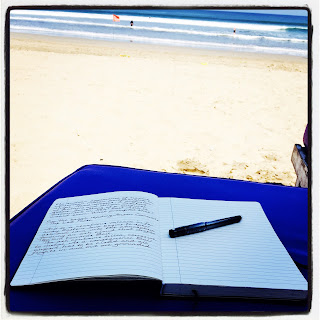
In my many conversations with teachers, the subject often turns to writing beyond the classroom. I urge both the teachers and their young writers to write beyond those four walls. -Write around the school, and weather permitting occasionally write outside of the classroom. Write at home.  Make a conscious effort to write somewhere else, somewhere different and see what it brings to your writing experience. Taking the time to write in a different location allows a broader range of sensory elements to influence your mind, your writing.  Consider your notebook as a travelling companion. Tuck it under your arm and write in wild, unfamiliar spaces. Actively challenge the notion that writing is something we just do at school.  Make it a form of portable magic, just like reading. Let's re-imagine writing as a free-range activity! Some writers need a special place to write. They can only write in that space, that particular location -by the sea, in the mountains, in a cottag...
Alerting Young Writers To The Importance of Setting

Image
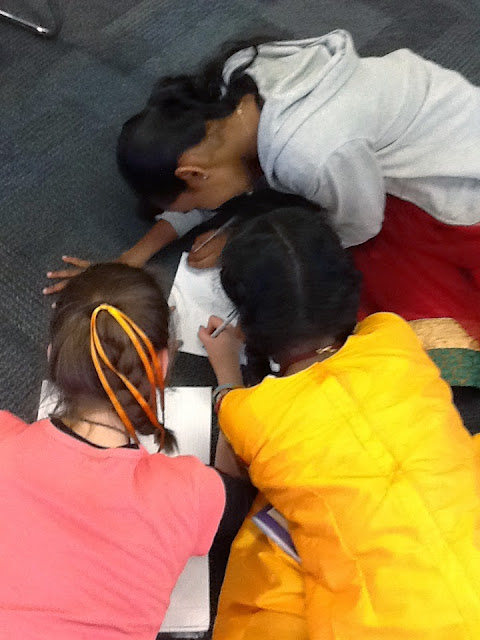
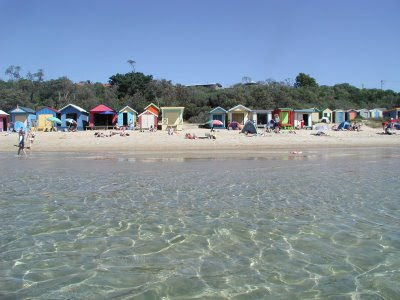
E stablishing a clear sense of a story's setting is vitally important if the writer wishes to respect the reader. Inexperienced writers often gloss over this important aspect of writing.. So, recently while working with writing groups at Benton Junior College we devoted time to investigating how experienced writers create a sense of setting and then allow the characters to act out their respective roles in this space. I drew their attention to the fine detail that writers often include to create a clearer picture in the mind of the reader. We talked about familiar settings- large/ small. We talked about imagined settings. We examined books where authors highlighted settings. The aim was for these young writers to garner ideas about how they might go about such crafting in their stories. As a further pre-writing activity, young writers drew their chosen places. They drew scenes from various angles, some commenced to list and label words considered relevant to the writing yet to co...

Strengthening Writing Links Between School And Home

Image
An extensive national survey of ‘Writing Practices in Australian Primary Education, Years 1-6 ‘ conducted by Malpique, Valcan, Pasternak & Ledger, and published in May 2022, revealed, among other matters, the following information regarding writing’s links to the home environment and current teacher practices. ‘Results assessing reported teaching practices to extend writing to the home environment showed that the majority of teachers (64.8%) never asked students to write at home with the support of a parent/guardian.  The majority of teachers (77.4%) also reported that they asked parents/guardians to read/share their children’s written work as infrequently as once a year, or never. The majority of teachers (63.9%) reported never, or infrequently encouraged writing, as a home task.  Communicating with parents/guardians to discuss students’ writing performance and needs, was reported as an infrequent practice by the majority of participating teachers (71.9%). ‘ These p...

The Poet Tree Positivity Project

Image
Woke up this morning, I was feeling quite weird, had flies in my beard, my tooth paste was smeared - well not really. They're actually lyrics from an old song 'Mr Spaceman,' by The Byrds that had formed an earworm in my head as I began writing this...  I actually woke with an idea for sharing poetry with my neighbours. So I set about creating what I'm calling 'The Poet Tree Project.' I am trying to deal with my current lockdown life by responding positively and creatively.  I have long held the view that poetry possesses a capacity to be healing and transformative, particularly in stressful times. It frequently performs a gentle dance around our emotions engaging them and soothing the soul. It remains one of poetry's many gifts to both the writer and the reader. There's an old, gnarled eucalypt tree outside my back gate and I thought it would make a perfect partner in my quest to share some poetry in this time of Covid 19. I can see the tree clearly from...

Writing from the Home Zone

Image
  So, yesterday I spent my writing time in our small garden. It was the perfect morning for writing outdoors. Quiet, balmy air, sunshine, no traffic humming in the distance, no machine noise, solitude in the garden. I also took time to wander about and take photos. If my illustrating skills were better, maybe I could have indulged in some drawing as well. I had an idea... Maybe the photographs could spark some short little poetry pieces.  That way I could share with others how the place we find ourselves located, can be quite an inspiration -if we sit still and observe closely. If we make a mindful effort to look around at what's in our immediate view. Ideas are all around us waiting to be discovered. ‘Sometimes the easiest way to start writing is not to try to think something up, but simply to write something down- and what better place to begin than with what’s is right in front of your eyes.’ Andy Griffiths, 'Once Upon A Slime' So, po...

Revealing Author's Craft To Student Writers

Image
When we read like writers we set about gathering information about writing that will form curriculum for our teaching. As teachers of writing, we must ask ourselves: What do I see the writer doing here? Why does the writer do this? Have I seen this particular craft move in other writing What can I call this craft move? How could I try this in my own writing? How could I help my student writers to try this in their writing? The more we practice reading like writers, the easier it becomes to identify elements of writing craft present in the books with which we work. It is a skill that develops with practice. It takes time and regular practice. It requires us to engage in professional conversations with our colleagues regarding a text's potential.That is why such matters should be part of teacher planning sessions. Such texts should be our ticket in. Bring a trusted author with you... In time it has the potential to change the way we read. When we learn to read like writ...

Helping Young Writers Understand The Significance of Details

Image
  When I ask young writers what they understand by the term 'add details' they frequently respond with, 'We have to add more describing words.' Some actually tell me that it means they need to add some adjectives. Such misconceptions sell the role of 'detail' so short.  As a consequence, this becomes the only strategy these developing writers have to address the important issue of detail. The result is often a piece of writing drowning in flowery, somewhat clunky adjectives.  A kind of adjective pile up.  Adjectives are like fat. We need to learn to consume them sparingly! I   recall how my teachers frequently glided by as we were engaged in writing and following a cursory glance at our assembled words uttered the phrase - ‘ You need to add more detail.’  These words were delivered while waving a floppy finger above the page. They would then move onto the next writer before there was any chance to ask a follow up question. We were left to p...

Writing A Flash Draft

Image
*UPDATED May 14, 2020 FLASH DRAFTS Sometimes writing becomes overly complicated when inexperienced writers are required to over plan, or over think their writing. Frequently, they end up overwhelmed by these well intentioned  requirements. On occasions teachers may note that the volume of writing a student produces is minimal. This is where the strategy of Flash drafts may assist the inexperienced writer to deal with such issues. Let's face it, sometimes the writer just need to 'write.' There exists within them an overwhelming urge to get words and ideas onto paper before they evaporate, or fly away. Overplanning can kill the urgency to write dead in its tracks. Insistence on the use of graphic organizers can also kill the joy. Flash drafts get young writers closer to the act of writing -and it most certainly gets them there much quicker.  The Flash draft enables the writer to feel a greater sense of control over the writing elements, as it involves ...