Posts

Showing posts with the label Lists

Assisting Young Writers to Launch Their Writing With Confidence

Image
The writer sits down to face the blank page, only to be greeted by the dazzling whiteness of the paper. The pen is tightly gripped as the writer stares at the empty page. There is hope that time will deliver the wondrous words desperately sought. The empty lines beckon inviting the young writer’s words. The challenge remains- How to begin? If you have experienced this feeling, you will have greater empathy for your students and those feelings that sometimes overwhelm them as beginning writers. They often have a broad idea regarding their writing, but have little idea where, or how, to begin. They want to produce something that effectively conveys a message but remain unsure of how to begin the process. 'I know what I want to write about, but I don't know how to start.' We need to recognize that it is at this point we can provide meaningful support to allay such writing anxieties. Teaching students how to think of something to write, provides a way forward. This p...

Writing's Launch Pad in the Classroom

Image
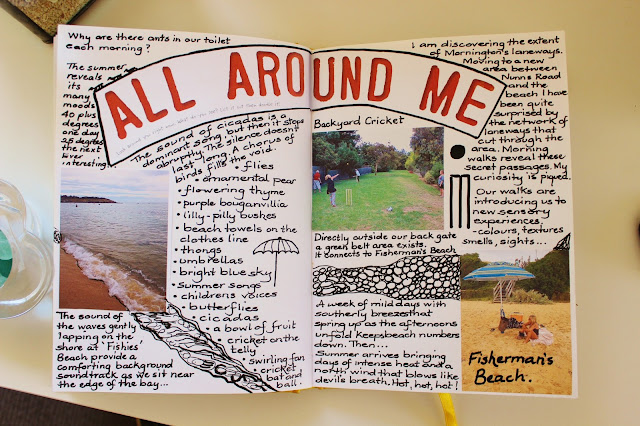
Writing's Launch Pad in the Classroom As the start of another Australian school year begins to settle in, the question arises –How do I most effectively engage my students in authentic literacy experiences? How do I encourage them to become lifelong readers and writers? It is important to remember that during the summer, many of them have not consistently engaged any considered reading and writing. For some, virtually no time has been spent on such pursuits. How do we rebuild their literacy muscles? How do we build their stamina for these critical literacy experiences? In these early days and weeks when students re-enter school, building personal relationships should be priority one, -finding out what defines them as literate beings. Students need an opportunity to talk and think about their reading and writing intentions. Some may need to draw, sketch create maps etc to further stimulate their thinking about potential writing ideas. It would make sense to challenge them to create ...

The Teacher And The Writer's Notebook

Image
As another school year commences here in Australia, an increasing number of t eachers are taking up the challenge of becoming teachers who write. As proof of this notion, they have committed to maintaining their own Writer’s Notebook.  If your writing life is just beginning to develop you may appreciate being alerted to possible types of entries. Notebook entries one might gather when starting out. Entries,  that will serve as examples to share with their students. Entries that will show students how you as their teacher interacts with the world. Once the writing habit forms, you will no doubt develop a greater sense of independence and self direction when it comes to collecting notebook entries. By then you'll hopefully be carrying multiple pens and seeing writing ideas everywhere you look.  If, for some reason you are experiencing trouble on the writing launch pad, maybe these ideas might prompt your thinking. They may spark a connection to a to...

Assisting Young Writers To Create Effective Titles

Image
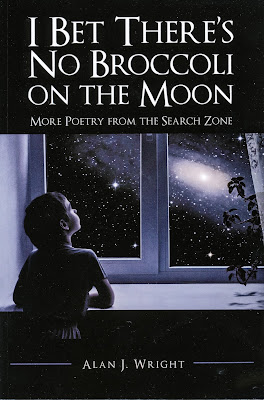
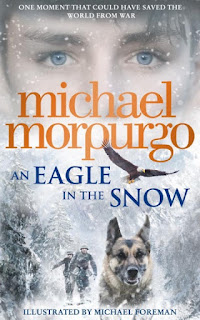
  Inexperienced writers don't usually afford titles of their written work much attention, investing little time thinking about or choosing a title. They are often viewed by young writers as labels or unimaginative cliches, rather than titles.   For this reason I would suggest a study of book titles across a range of genres is well worth the investment in time. As a writer, I have come to appreciate the important role titles play in any written piece. The title is a critical part of marketing appeal and for that reason publishers and writers take a lot of care with the choice of their titles.    I once spent almost two months pondering the title for a poetry anthology I had written.  All the poems were in place, but a suitable title was proving somewhat elusive. I rejected many potential titles before eventually choosing one I believed was a bit quirky and had some appeal to a reader's curiosity. I considered this a worthwhile investment in time. Some might ...

Brainstorming , Balance and Bright Ideas

Image
Returning to a class of year 2 learners after an absence of two weeks, I began by asking them if they were able to remember what we had focused on during our previous session together. They thought for a moment and then began to recall some of the writing ideas we had previously examined. I was most impressed when they mentioned that we had been looking at the ways in which writers gather ideas. It was then a student seated at the back of the group raised his hand enthusiastically looked me directly in the eye and told me,  'We did lots of brain-draining.'  'Close,' I said. 'I think you mean brainstorming, although sometimes it does feel a little draining.' Ah yes, from the innocent we often get refreshing honesty and accuracy.  Now that there prior knowledge had been activated, it was time to move into the new workshop. This time we were looking at the craft strategy of ‘inside/outside’ (physical world/emotional world) The teachers and I had noticed that much o...

The Gathering of Random Thoughts In Your Writer's Notebook

Image
Renowned Australian author, Helen Garner uses the term ‘Notes: aimless' to denote the jotting down of thoughts in her writer’s notebook. These are the thoughts that sprout persistently in the inevitable cracks between writing projects. They appear sometimes as lists of scribbled possibilities. Sometimes the noted ideas are related, at other times they possess no obvious connection to one another - a smattering of brain activity is captured in hope and expectation.  I am aware of this phenomenon being present in my own writing process.   When rereading older notebook entries, I encounter such notations and find myself speculating over what may have provided the initial spark of motivation. I start to consider the thought that brought such words to the notebook page in the first place. Rereading them is now surrounded with an air of mystery, sometimes even strangeness. I think of these entries as random, but I don’t view them as being aimless. I refer to them as ‘random th...

The Value of Making Lists in a Writer's Notebook - A VIDEO

Image
Here is my latest video. It deals with making lists in our writer's notebooks.  In the video I share some of many ways making lists assists me to be a more effective  writer. Lists: Help me organize my thoughts Brainstorm new ideas and possibilities Help me plan my writing intentions Allow me to indulge in valuable wordplay Expand my thinking Expand my choices/options Allow me time to have some writing fun Challenge my current thinking Activate my thoughts before I write Across almost 40 years of using a writer's notebook the making of lists has been a constant feature of my harvesting efforts. When you create a list it is a most practical exercise for a writer to undertake. You are building your knowledge, harvesting potential and taking action that may eventually transform into something more meaningful.  Tip: Some writers leave a blank page opposite the list page. This allows them to respond in greater detail, should they feel the urge. 

Helping Young Writers Discover The Words They Need To Begin

Image
The writer sits down to face the blank page, only to be greeted by the dazzling whiteness of the paper. The pen is tightly gripped as the writer stares at the empty page. There is hope that time will deliver the wondrous words desperately sought. The empty lines beckon. How to begin? If you have experienced this feeling, you will have greater empathy for your students and those feelings that sometimes overwhelm them as beginning writers. They often have a broad idea regarding their writing, but have little idea where, or how, to begin. They want to produce something that effectively conveys a message, but remain unsure of how to begin the process. 'I know what I want to write about, but I don't know how to start.' We need to recognize that it is at this point we can provide meaningful support to allay such writing anxieties. Teaching students how to think of something to write, provides a way forward. This prewriting stage is the time for students to think a...

From Territories To Topics

Image
W riting T erritories Nancie Atwell taught me that the broad range of things we do as writers define our writing territories. They include genres in which we write, or would like to write.Genres and modes we would like to try. Subjects we have written about or would like to, and real or potential audiences for our writing.  Our writing territories should be packed full of ideas, obsessions, experiences, itches, aversions, and feelings. The writing about these territorial issues may take many forms –poems, memoirs, novels, reviews, literary criticisms, essays, articles, letters, speeches, lists. Our writing territories are as vast we allow them to be. My Personal Territories include: Poetry Social Issues Literature My Life In Education Music and Memory Travel adventures Childhood adventures My parents Being an educator Misadventures, mistakes and places beginning with “M” Family matters/history Learning about myself Collecting –books, music, photograp...

Realistic Fiction-Time To Get Real

Image
Realistic fiction is a genre that doesn’t get the attention it deserves. It’s there under our noses, yet the writing of other genres and styles is more frequently encouraged. It’s perfectly legitimate to use a real life event as a starting point for a realistic fiction writing piece. I have put together some possible ways to use a real event as a launching pad for a fictional piece. Kids also need to know that they can combine aspects of various real life events and mix them into the one story.  Ask students to: Make a list of at least five real life events (funny, exciting, weird, scary) that have directly affected them. Choose one to use as the starting point for their ‘made up’ story. This becomes the impetus for the writing that follows: Find an alternative problem for the characters to solve Change the names of characters. Add additional characters to a real event Change how characters talk, behave or react. Change the setting where the action takes place....