Posts

Showing posts with the label Reading as a Writer

The Journey to Mentor Text Mastery
Image
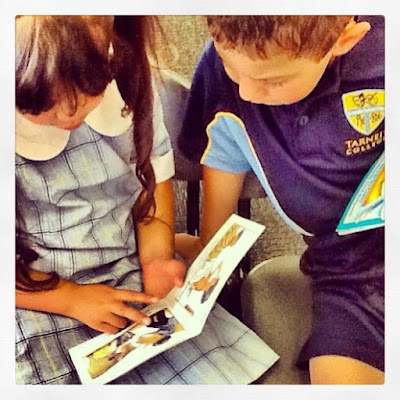
This is a journey that begins with selecting and sharing powerful texts and simply letting kids enjoy them. It is a journey of discovery. It involves sharing texts with learners. Texts we know and trust. Texts written in such compelling ways that they can assist us to more effectively teach the craft of writing. They become mentoring texts.  Think of mentor texts as a term that essentially means – models, exemplars or examples . ‘Mentor texts’ is not something we do within a writing program for its own sake. It is not an entity in itself. It is an integral part of learning how to become a better writer. It requires the ability to read like a writer in order to be able to see the potential in a text to provide a model worth following or adopting. Our starting point as teacher/writers is to share the joy of reading great words and the possibilities they might potentially spark in the mind of the reader. Reading a text initially for enjoyment, before you move to examining craft, incr...

Embracing Poetry As Both Reader and Writer

Image
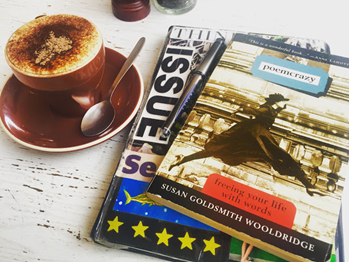
  I was recently interviewed to discuss how I embrace poetry as a reader, writer and educator. Here are my responses: How do we see a purpose for writing poetry? It’s always been a smoother, more precise way of saying something. Poetry looks different on the page, and often sounds different to the ear. It is unique. It can makes us laugh, cry, take action. It embraces mud and flowers with equal fervour.   It informs, educates us by allowing the truth to sneak up on us.   The words endure long after the poet who wrote them. Memorable words that become engrained. That’s why it retains a special place in the literary framework. How do we make it a part of thinking/talking? By setting it free-   releasing it from the narrow constraints of set work units and ‘poetry month’ and allowing it to spread out like honey to permeate and sweeten our daily existence. By buying my own poetry books. By insisting our school libraries make a point of acquiring new, cont...

Helping Young Writers Find Treasure- Learning To Read Like A Writer

Image
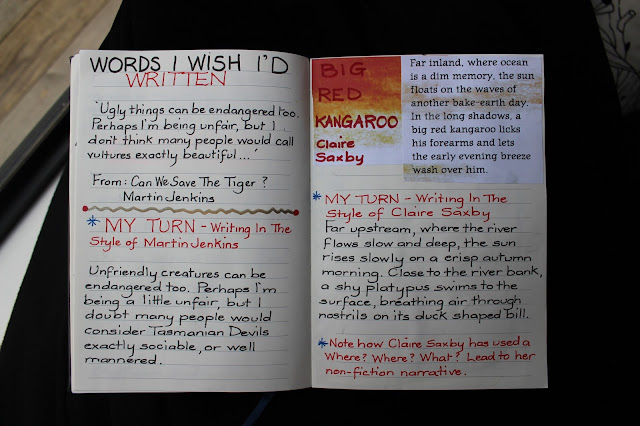
This week I found myself closely re-examining the content gathered across the pages of my writer's notebooks all these years. I was focused on the kinds of collected items that had gathered upon the pages. Certainly a multitude of my own words and thoughts. However, there were also the words of other writers nestled along side my own words. It lead me to thinking about what I have seen in a multitude of kids notebooks across the last 20 years or so.  What struck me as significant, was the noticeable absence of words gathered from potential writing mentors. These young writers appear to have been left out of the loop when it comes to the treasure awaiting them in the very books they read, as well as those read to them, -treasure their eyes, their minds, overlook almost daily. Nobody rang the alarm alerting them to these collectible word treasures. They don't read like writers and that's such a shame... I am a frequent gatherer of words I wish I had written. Words from fellow...

Slice of Life Tuesday- Celebrating The Influence Of Mentor Texts

Image
The Wonder of Mentor Texts When we practice the art of reading like writers, a world of possibilities opens up. Mentor texts and their particular magic begin to reveal themselves to us. We are no longer alone in our teaching of writing. We are lifted up by the writers we know and trust. They become our unwitting collaborators. How great is that? A mentor text is any piece of writing that can be used to teach a writer about some aspect of writer’s craft. A small extract may well be sufficient to qualify as a piece of mentor text. Think of those favourite books you have read many times, those books you know like a friend. Think of those books you find yourself easily quoting.  For me, the best mentor texts are those that can be used time and again throughout the year to demonstrate many different characteristics of writing. It is easy to teach aspects of writing using texts where a comfortable familiarity exists.  Some of my most trusted mentor texts ar...

Slice of Life Story Challenge March 30 -Essential Connections Between Reading And Writing

Image
Essential Connections Between Reading And Writing I am currently preparing for a conference presentation I am scheduled to present in Melbourne in early May. The conference will focus on the power of reading. I will be talking about the essential connection between reading and writing and how important it is for teachers to learn to read like writers. Acquiring this skill enables teachers to more readily identify suitable mentor texts for teaching aspects of both reading and writing. Two strong quotes come readily to mind as I prepare: ‘The writer is careful what he/she reads, for that is what they’ll write.’ –careful of what they learn, for that is what they’ll know.’ Annie Dillard, The Writing Life ‘Nobody but a reader ever became a writer.’ Richard Peck I have always held true to the belief that a highly visible reading and writing life is an essential part of being an effective teacher. Therefore, I must be what I teach -a writer and a reader. In that way the teac...

Summer Reading -Feeding The Writer

Image
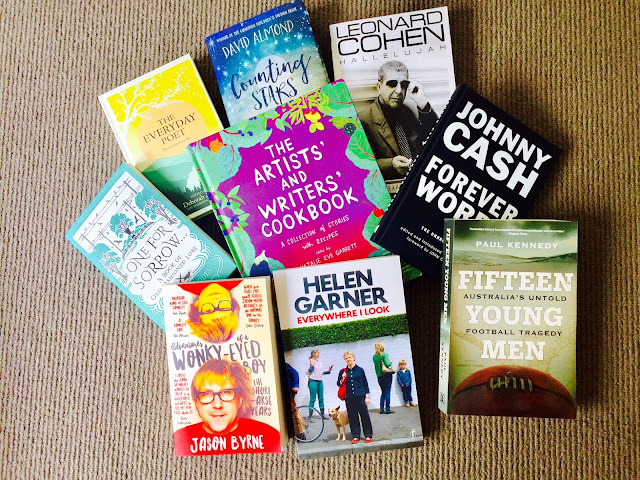
Books For Summer -Feeding The Writer My Summer Reads It is comforting to have assembled a collection of books ready for my summer of reading. These books will nourish my need for knowledge, challenge my thinking and sustain my writing life. As a life long learner, books provide the necessary spark for progressively chipping away at my ignorance.  I love it when I see heads bowed in pursuit of understanding as readers of all ages lose themselves in a book. I love the privacy of reading and the public sharing that often follows. I love the notion of books as travelling companions and guides. I love that a book can make me ambitious. A book has the capacity to be transformative. A book can help me escape and take me to new worlds and offer new ideas, propositions and understandings. A book can challenge my current beliefs and prejudices. I draw much comfort from knowing books are inseparable from my view of myself as a writer. Over the years I have lost count of the t...

The Influence of other Authors on our Teaching of Writing

Image
Writing Under The Influence As teachers of writing we frequently gravitate to the words of authors we admire. We then take their observations about the writing process and apply them to our own writing efforts. However, when we find ourselves reading published works- novels, picture books, news articles, or poems the process that has delivered them is largely hidden. We begin to speculate about what has taken place in order for these profound words to appear before our eyes. We begin to search for answers. We want to empower ourselves in order to be able to empower our student writers. We begin to grow our own understandings in order to develop strategies we can teach our students. This is an exciting development in our teaching. When we move in this space, our teaching is full of possibility. The writing moves of writers we hold in high regard begin to inform our teaching.  We start to consider the impact a particular writing move might make for the developm...

Learning To Read Like Writers

Image
R eading L ike W riters To think how a teacher of writing would read, we must start by thinking how a writer would read. We also need to teach our students to read  in this way, but only after we have helped them become ‘someone who writes.’ I believe the following strategy I first saw used by Katie Wood Ray provides an excellent framework for identifying writing craft in a text: 1. Notice something about the craft of the text 2. Talk about it and make a theory about why a writer might use this craft 3. Give the craft a name 4. Think of other texts you know. Have you seen this craft before? 5. Try and envision using this crafting in your own writing Source: Katie Wood Ray General Observations About Texts What’s the text about? How does this help us think about topic selection? What is the author’s approach to writing? Is there more than one form operating within the text? Who is narrating the piece? Does the text...