Posts

Showing posts with the label Senses

Alerting Young Writers To The Importance of Setting

Image
E stablishing a clear sense of a story's setting is vitally important if the writer wishes to respect the reader. Inexperienced writers often gloss over this important aspect of writing.. So, recently while working with writing groups at Benton Junior College we devoted time to investigating how experienced writers create a sense of setting and then allow the characters to act out their respective roles in this space. I drew their attention to the fine detail that writers often include to create a clearer picture in the mind of the reader. We talked about familiar settings- large/ small. We talked about imagined settings. We examined books where authors highlighted settings. The aim was for these young writers to garner ideas about how they might go about such crafting in their stories. As a further pre-writing activity, young writers drew their chosen places. They drew scenes from various angles, some commenced to list and label words considered relevant to the writing yet to co...
Noticings of a Writer at Large

Image
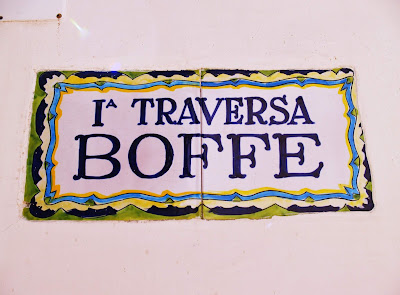
 I have been away from these pages for some time. But I have not been lollygagging or malingering. I have in fact been hunting and gathering in far away places. I have recently been on what I called my 3 Island Tour. Over the course of almost 6 weeks, My wife Vicki and me had the good fortune to visit the island of Capri, Sicily and Salina. Each time I am given the privilege of embarking on a new adventure I am reminded of this quote by Ibn Battuta: 'Traveling – it leaves you speechless, then turns you into a storyteller.' Among the many special moments I captured in my notebook while away, there was one in particular that I wanted to share here. As I walked through the Boffe section of Anacapri on the Isla Capri, I passed high white washed walls of long standing, local residences. On the walls of many of these buildings, colourful ceramic tiles feature. They are often adorned with elaborate numbers on patterned backgrounds, many also feature the name of the residence...

Reviewing The Role of My Writer's Notebook

Image
I feel a compelling need to revisit notions of what it means to use a writer’s notebook as a writing tool. Firstly, I understand, not every writer has a notebook in the traditional sense, but many do. I am one of the many. My relationship with writer’s notebooks winds all the way back to September, 1983. Across the intervening years, my notebooks have been various. I have an extensive collections of notebooks. Notebooks documenting my journey as a writer across more than three decades provide a rich paper trail from which I am able to mine some writing wisdom. Mu notebooks have evolved over time with respect to shape, form, and content. However, there are elements of that notebook/writer relationship which have remained consistently unchanged. Each notebook has been sturdy in its design. All my notebooks have had strong spines and hardy covers. Most have had ruled lines, but occasionally I have consciously chosen a new notebook with totally blank pages. I enjoy the variety such...

Teaching Student Writers The Art of Observation

Image
  Do You See What I See? The Writer As Observer Learning to be observant is a valuable life skill... -and keeping a writer’s notebook requires the writer to develop keen observational abilities too.  With practice the writer begins to notice a greater range of things in the world around them and notice them more acutely too. Being observant affords the writer increased opportunities to collect sensory observations from their immediate surroundings. Such observations can then be used to inform writing efforts. The horizons expand. The influences on the writing therefore expand as well. To help student writers to develop greater awareness of how writers capture sensory observations I suggest the following actions:    Share some text examples where the writer includes sensory details. Details that enable the reader to visualize the scene.          Share an example from your own notebook where you have focused ...

Assisting Young Writers To Develop A Sense of Setting

Image
A Sense of Place SETTING The inexperienced writer often pays scant attention to this important element of their writing. As a consequence, their readers are provided with an incomplete vision of where the actual story is being played out. It is important to draw attention to the way experienced writers use words to create strong visual images to deliver a strong sense of setting. The setting or place, creates the world in which the characters live and struggle. In this world, the plot unfolds. Something will happen! Setting and Your SENSES When you think of a setting, describing it using your senses provides the writer with so much fertile thought for building a backdrop. •             Touch •             Smell •             Sight •      ...

Assisting The Inexperienced Student Writer Make Best Use of Their Notebooks

Image
As inexperienced writers, students frequently need extra guidance and support in the early stages of the year to develop that essential momentum and confidence necessary for successful writing. They are learning to trust a new teacher, new surroundings, and maybe new classmates. There is a lot to consider. It takes a little time to adapt to new routines and expectations when the new school is beginning. What does this teacher expect of me as a reader and writer?   How do we as teachers assist students to gain trust and develop momentum as writers? You will have to gently lead them forward by revealing the hidden potential of this writer’s resource, showing them how it can play a vital role in their daily lives as writers. Used appropriately, Writer’s notebooks allow developing writers to make stronger connections to the world surrounding them. The harvesting and documenting of their daily lives provides an easy, informal way to start thinking about new topics ...

Assisting Student Writers To Establish A Sense of Setting

Image
I have been encouraging three classes of Grade 5 writers to devote more attention to establishing setting in their writing. I explained how setting assisted readers to gain a sense of place for their characters. It assists the reader to see where the plot is unfolding  and where the struggle is taking place.  The setting can be used in many ways in a piece of writing.  A brief description of a place is an excellent way to set the scene at the beginning of a piece of writing. It gives the reader time to feel at home before moving into the real action, I further urged these young writers to consider their senses when writing about settings. To enhance their sense of setting, I asked the students to think about a place with which they were familiar. The idea was for them to walk around the chosen setting in their minds. To visualize the elements of the setting is important in capturing the place they are charged with describing.  Here are some ex...

A Place For Teachers To Begin Writing

Image
Childhood is a rich source of writing inspiration for all writers. For those teachers unaccustomed to writing for and with their students, it is a great place to commence. As a starting point for writing I encourage inexperienced adult writers to recall aspects of childhood as an ideal place to dive into some writing. The range of experience is enormous –ranging from disappointment to triumph! The full gamut of human emotions condensed into those special years. Starting in this place will assist you to connect strongly with the lives of the students you teach. It will enable you, the teacher writer to convey the importance of capturing those small yet significant moments in our lives, at the same time employing your senses to enliven the writing. Should you choose to take up this challenge try to avoid the overlay of adult perspective in the early throes of your memoir piece. Considering the age of the audience, it might be more valuable to write from the inner child persona an...