Posts

Showing posts with the label Craft Strategies

Teaching Writing Under The influence
Image
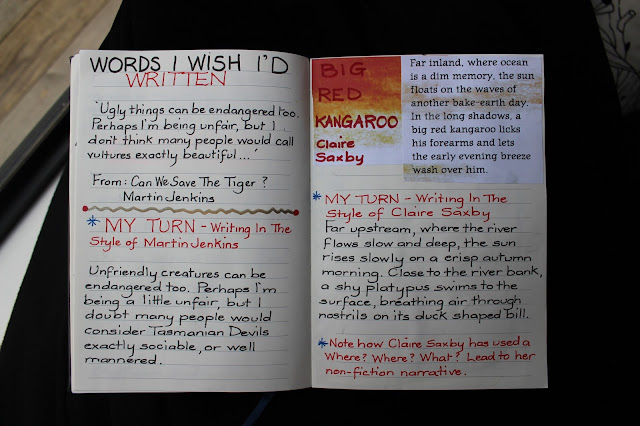
 Teaching   Writing Under The Influence As teachers of writing we frequently gravitate to the words of authors we admire. We then take their observations about the writing process and apply them to our own writing situations. However, when we find ourselves reading published works- novels, picture books, news articles, or poems, the process that has delivered remains largely hidden. We may find ourselves speculating about what action has taken place in order for these profound words to appear before our eyes. We may even begin to search for answers. It is important to empower ourselves in order to be able to empower our student writers.  Our own understandings must grow in order to develop strategies we can teach our students. This offers an exciting prospect for our teaching. When we operate in this space, our teaching is full of possibility. The writing actions of authors we hold in high regard begin to inform our teaching.  We start to consider the impact a partic...

They're Writing! - What Do I Do To Sustain The Output?

Image
  One of the great challenges we face as teachers of writing is learning to observe student writing with a view that encompasses instruction. The trick is to look closely at the writing of an individual to notice what that writer needs and at the same time consider other students who may also be faced with the same direct need in the development of their writing. Patterns of need frequently emerge as you confer with your students. When this happens you may find that you need to develop a teaching focus for the whole class, or a small group. It will not surprise you to learn that this is the perpetual challenge of the Writer’s workshop. Once your students are writing regularly and displaying some stamina for the task, you may find yourself asking the questions – What happens now? What should I do to most effectively move their writing forward? What do I say to them when I join them for a writing conference? It is easy to look at a student’s writing and immediately jump on the mechan...

Why Young Writers Need To Read Their Words Aloud

Image
  If we purposefully teach student writers the habit of  ‘re-reading’ their writing, we provide them with a powerful tool for improving the quality of their writing. This reading includes, re-reading as they draft,     and re-reading as part of revision. They begin to hear their words as a reader will hear them. It provides powerful feedback. Reading aloud to the walls & windows. When drafting a piece of writing the developing writer is commonly driven by the production of words across the page. The urgency surrounds the act of writing,  so the writer is not necessarily focusing on what the words are ultimately saying. The result is often- too many words or too many ideas. The writing may lack focus.  A decision is required at this point. What exactly do I want my words to say and mean?    It may be difficult to throw away words considered precious. Remember though, each word cut from the text may lead t...

Assisting Young Writers To Create Effective Titles

Image
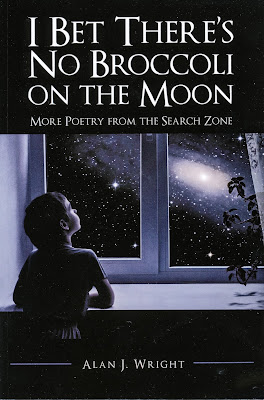
  Inexperienced writers don't usually afford titles of their written work much attention, investing little time thinking about or choosing a title. They are often viewed by young writers as labels or unimaginative cliches, rather than titles.   For this reason I would suggest a study of book titles across a range of genres is well worth the investment in time. As a writer, I have come to appreciate the important role titles play in any written piece. The title is a critical part of marketing appeal and for that reason publishers and writers take a lot of care with the choice of their titles.    I once spent almost two months pondering the title for a poetry anthology I had written.  All the poems were in place, but a suitable title was proving somewhat elusive. I rejected many potential titles before eventually choosing one I believed was a bit quirky and had some appeal to a reader's curiosity. I considered this a worthwhile investment in time. Some might ...

Setting Up The Writer's Notebook

Image
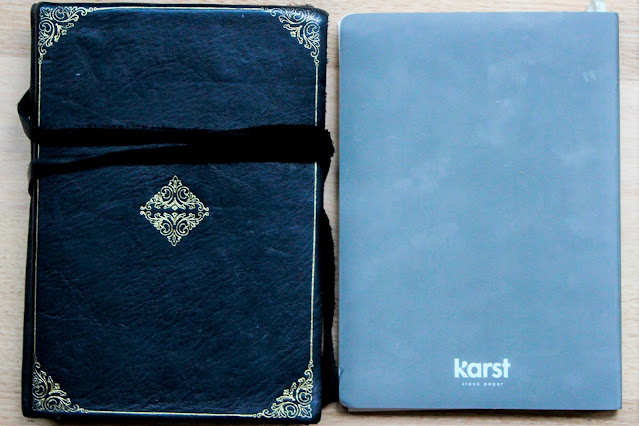
  ‘Giving young writers genuine choice is the best way I know to create an environment where they can flourish.’  Ralph Fletcher  Some suggestions for teachers of writing to consider in regard to using writer's notebooks in the classroom writing program. • Choice of notebook is the first opportunity to practice choice. Allow each writer to choose a notebook that meets their needs. • Allow notebooks to move between school and home to create a bridge between the two locations. Encourage writing in multiple locations, at different times. • Not everything written in a notebook has to be published or fully drafted. Not everything is significant.  • Respect the integrity of the notebook by not writing in them. Don’t try to control the notebook, otherwise it may well become just another ‘workbook’ in the eyes of the young writer. Its integrity will fade away. It is not assessed or scrutinized. It is nourished and supported as a writer’s resource. • At all times th...

Teaching Writing Craft- Being Explicit

Image
T eaching the craft of writing requires teachers to be explicit in their work with students. This explicitness occurs when we provide a progressive, sequential program of instruction, when we are clear about what it is we want children to learn, and when we provide a meaningful, focused instruction. Instruction informed by formative assessment of student writing.  When consideration is given to focused learning, student writers need to be provided with opportunities to make sense of the learning. This is achieved by creating purposeful connections between lesson purposes, lesson tasks, texts, and lesson reviews or conclusions. If these aspects of lessons align, the chances of success increase noticeably. When introducing a new craft strategy: Explain to students the purpose of the instruction and why you have chosen to involve them in such instruction; Explain the strategy explicitly, specifically saying what it is, and how and when it should be used; Model the strategy in authenti...

Using Close Observation of Writers To Inform Teaching Practice

Image
  Here are some matters that have arisen from my ongoing work with the presentation of 'The Young Writer's Program.'  This initiative is a joint collaboration between PETAA (Primary English Teacher's Association of Australia) and the Victorian State Government.  The program aims to support young writers (Primary and Secondary) who have demonstrated aptitude and/or interest in writing. The program also aims to assist teachers to more adequately engage writers in the classroom writing program.  The matters identified might form the focus of further conversations or investigation within a school writing program. They may inform planning.  Hopefully, they will shine a light on writing actions that might serve to push writing development to the next exciting level.  I present these observations in no particular order. They are laid out for your consideration. I have been documenting my observations across several presentations of this excellent program.  If...

Assisting Young Writers To Be More Specific

Image
Going From General To Specific. Young writers benefit greatly when shown how to sharpen their writing by moving from the general to the specific. When they are armed with this important knowledge about writing, it improves the quality of the images that emerge in the mind of the reader. When we know the exact name of something, it brings that item, that thing,  closer to us. It provides us as readers with greater clarity. The fog of uncertainty is blown away. As readers, we are more alert.  ' The bird flew down ' conveys less information than writing, ' The eagle swooped. ' Judy Blume in her book ‘Tales Of A Fourth Grade Nothing’ uses specific details to describe the materials her characters used to make their school project. 'We keep our equipment under my bed in a shoebox. We have a set of Magic Markers, Elmer’s glue, Scotch tape, a really sharp pair of scissors and a container of silver sparkle.' Notice how the initial sentence is quite general, However, the ...

The Critical Role of Revision In Improving Writing Quality

Image
  Revision is a phase of the writing process frequently ignored and commonly misunderstood. Because it is misunderstood, it is often afforded scant attention –glossed over. Yet,   it is in the revision phase that the writer has the greatest opportunity to lift the quality of the writing.   It is a chance to polish those raw words. Too often when inexperienced writers revise a writing piece, it simply involves changing the surface features of the writing- spelling and some rudimentary grammar. Sadly, the content may remain unaffected by the visit. The notion of adding, changing, deleting and reordering the language fails to impact the overall quality of the writing. A great opportunity to upscale the writing goes begging. The writing process is one of problem solving. Writing is recognized as a cognitive exercise. Therefore the ability to revise is significant for every single writer. It assists the writer to more clearly assess their own words, clarify thoughts and i...

Growing Characters In Our Stories

Image
There is a saying, ' no struggle, no story,' so the characters that present in stories need a measure of conflict and tension to hold the reader's interest. As young writers grow in confidence and experience, this is a critical understanding they must develop. It can contribute greatly to the quality of the plot lines of the stories they write. A little bit of adversity, or experiencing a problem is important for our characters. It's good for them to wrestle with a conundrum... When characters encounter a problem or have to overcomes a hurdle, it increases their appeal to the reader. They become more relatable. More human. More fallable or imperfect. So when the writer creates a conflict for a character to grapple with, the writing is enhanced. The writer can make that conflict happen within a character- doubt, fear, shyness. It can also be between characters- disagreement, feud, need for revenge, a perceived slight.  Sometimes the story may involve a series of...

Helping Writers Show Good Form

Image
You ’ ve Got Form! Writing choice is so clearly in evidence when the writer is afforded opportunities to decide for themselves the form their writing piece shall take. It is in this headspace the writer is faced with many options. Every writing piece possesses the potential to assume a variety of forms, so it becomes important to choose the form that best suits that writer’s intention. When the writer in inexperienced, it becomes important to support them in making a good decision. More often than not, the writer knows immediately how they want the writing to be presented. When words and ideas bubble up in my mind, it frequently presents as a poem -but not always. Another idea may be perfect as a memoir piece, or a short story. When this happens, I can move into the writing effortlessly. Sometimes deciding which form best suits our ideas can prove a little more difficult. When this happens, as writers we must be prepared to experiment. Try it one way and if that doesn’...