Posts

Showing posts with the label professional reading

A Visible Reading and Writing Life Delivers Teachers Power and Influence
Image
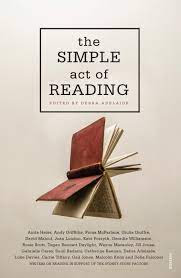
  In this collection of stories, writers talk about the authors they revered as children; the stories and poems that  shaped their own work. A teacher I was working with as a literacy consultant, once boldly announced, ‘ I don’t want my students to know anything about my life. I am just here to teach.’  The comment disturbed me on a number of levels. It represented no sense of the need to bond with students. I had the impression the teacher was simply a forlorn imitation of a living, breathing teacher. When we make the effort to bond with students, we consciously humanize ourselves. We connect with our students more effectively when we provide insights as to how we operate as lifelong learners. In order to do this, we need to give something of ourselves and that requires an emotional commitment, not just the rolling out of curriculum. It continues to surprise me how many of my colleagues conduct secret reading and writing lives. Literate lives hidden from their students a...

Summer Reading For Those Who Teach Writing

Image
It remains ever important to continue to build a knowledge base around your pedagogy. For those charged with the responsibility to teach writing it is important to seek out books deepen understanding. Books that provoke thought about the most effective ways to go about the role of being a writing teacher and a teacher who writes. Investing in one's professional self, ensures a better outcome for student learners. After more than four decades in education I continue to feed my need to know.  Teachers tell me how each summer they put aside time to read at least one professional book. It's a choice, but it's also a statement of intent. You only do it when you are ready to receive. The fog of the classroom has cleared and your vision for what's possible improves. Teachers also ask, what should I be reading ? So, to assist in that direction I will share with you some books I have found invaluable in recent times. Books that were both affirming and thought provoking. Bo...

All A Twitter About Reading and Writing

Image
The world is what you make it. So is Twitter. I am a willing participant in the world of twitter. I use it to be informed and to share information. I have shaped the feed I receive to include those voices that will grow my understanding of life and learning -well mostly. I use it as a conduit for thinking. The reading I do informs my writing. It is a place I go to to gather a little treasure among the trite and the tasteless. A boy once asked his father, 'What is Twitter? The father responded, 'Well you know how annoying it is when the neighbour's dog starts barking in the morning, well Twitter's like that, except it goes all day and all night.'  Some educators I meet perceive Twitter in this way and as a result have no part of it. Others dabble occasionally. There are also many who, like me, have jumped right in. I  see Twitter as a tool for learning, a resource for reading and learning. Opportunities exist for information sharing invaluable to my literate...

Some Recommended Reading For Teaching Writing

A List of Professional Texts -Recommended Reading for Teaching Writing                                   TITLE                                                      OVERVIEW ‘Breathing In, Breathing Out, Keeping A Writer’s Notebook.’ Ralph Fletcher, Heinemann A slim, but precious book that reminds us of the need to capture the spark of being a writer and using the notebook as a safe place to experiment. I keep returning to this time and again… ‘What You Know By Heart - How To Develop Curriculum For Your Writing Workshop.’ Katie Ray Wood. Heinemann. Katie Wood Ray reminds us how important it is to envision curriculum ideas through the writing we read. It was here that I learnt the importance of reading like a writer....

Learning From Other Writers- Goldberg's Gold

Image
Natalie Goldberg’s book, ‘Writing Down The Bones' provides so much sound advice on the writing life and the teaching of writing. It’s a mine full of treasure for anyone wishing to better understand and appreciate the how and why questions surrounding writing. I first read this book about ten years ago. It immediately identified itself as a keeper. I keep it within easy reach on my study shelf. Last Thursday I delved back in to soak up Natalie’s words once more. I had a medical appointment that day, so I took a friend to keep me company while I sat waiting for my appointed consultation. Here are some of the words that sang in my head as I waited… ‘Writers are great lovers. They fall in love with other writers. That’s how they learn to write.’ *This is all part of learning to read like a writer and finding suitable mentors. ‘Talk is the exercise ground of writing. Talk is a way to warm up for the big game- the hours you write alone with your pen and...

Slice of Life Story Challenge Day 26 -Sharing Your Literate Life

Image
Today, I presented at a conference for Graduate Teachers in Melbourne. The conference title was ‘Surviving and Thriving in the Early Years of Teaching.’ Among the many things I shared with participants, was the importance of being joyfully literate, and the critical nature of sharing our reading and writing lives with the students in our care. When it comes to teaching, you must in the stream with your students,. You can’t stand on the bank imploring them to swim faster! Your efforts must intially go into helping keep them afloat. When you share aspects of your reading and writing self, it adds extra depth to your humanity and strengthen the connection to what you are demanding of them. It makes you credible… These remarks led me to thinking about my personal situation as both reader and writer, and I recalled reading recently that one of favourite educators, Richard Allington, speaking at a conference in Colorado had restated his belief that unless you know a ...

BRAINSTORMING With Stenhouse Publishing

Image
I woke this morning to some great news!  My article on brainstorming previously posted by Two Writing Teachers earlier this year, has been picked up by Stenhouse Publishers in their latest Newslinks. Like me, you can subscribe to Newslinks which is free and provides lots of great professional support with writing, reading and numeracy. If you missed the original article, or are interested in reading about assisting young writers to more effectively generate ideas for writing then go to Stenhouse Newslinks at: http://www.stenhouse.com/html/nl227.htm  or you can link to the article at  Two Writing Teachers: http://twowritingteachers.wordpress.com/2011/05/20/wright/ Tenielle's Brainstorming Ideas when thinking about her Aunt

Some Issues Around the Writer's Notebook

Image
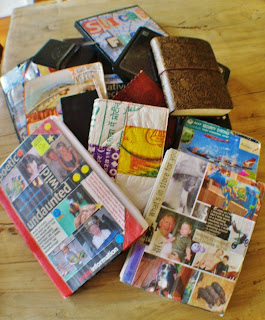
Writer Joan Didion said our (writer’s) notebooks give us away. We are revealed by the contents. Our notebooks are a place to collect and then take those collected items and use them to spark further original writing. As Ralph Fletcher, writer and educator reminds us, we use our notebooks to breathe in (collect) and breathe out (generate). With these thoughts ringing in my ears, I envisage notebooks brimming with words and ideas across a range of subjects and genres. The notebook is a place to experiment, take risks, make important discoveries or excavate memories and ideas from deep within. It can be a place to have fun with words. So why is it that in many classrooms when students take out their notebooks the pages reveal a picture far removed from the images I have just outlined?    Why does one get the impression that the notebook in these school settings is only realizing a small part of its potential? Why is the critical ingredient –‘writing,’ so sadly lac...