Posts

Showing posts with the label Story Grammar

Guarding Against Writing Orthodoxies

Image
  As renowned, researcher, writer and educator, Donald Graves said many times,  ‘The enemy is orthodoxy!’ He rightly concluded that orthodoxies are trotted out as simplistic shortcuts to what we know are complex processes. Processes essential to the teaching of writing. Orthodoxies frequently develop from misconceptions and misunderstandings regarding the true nature of writing. They become substitutes for genuine thinking. They present as evidence that thinking has been short circuited. They   most certainly mitigate against deeper thinking;   clouding the issue with often meaningless actions, jargon and expectations.   They frequently rise in direct opposition to the reality of writing practices. In this way they become a distortion of what writers actually do. The rise of orthodoxies occurs when a teacher does not know the child writer, or the process of writing well enough to know what they are actually witnessing. They are frequently used by teachers ...
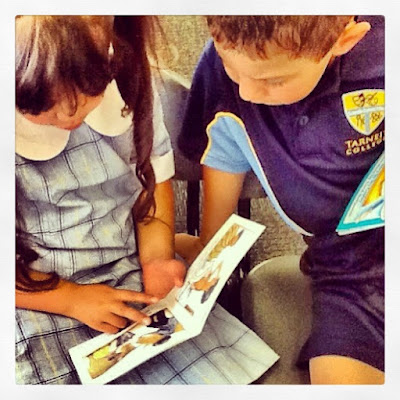
Mentor Texts- Mindfully Considered

Image
There is something quite magical in being able to spread the joy of reading great words and what possibilities they spark in the mind of the reader.  It all begins with selecting and sharing powerful texts and simply letting kids enjoy the wonderful words within.   Reading a text for enjoyment before you move to examining craft increases the likelihood of the text impacting on a student’s writing. When the student knows the text, it releases their cognitive energy more specifically to that aspect of the text under examination. Think of mentor texts as a term that essentially means –models, exemplars or examples. ‘Mentor texts’ is not something we do within a writing program for its own sake. It is not an entity in itself. It is an integral part of learning how to become a better writer.  It is an approach requiring an ability to read like a writer. This allows the reader to see the potential in a text to provide them with a writing model worth following or adopting. When ...

Assisting Young Writers To Compose Effective Narratives

Image
The Full Story About Narratives Before young writers can begin to develop a more distinctive storyteller’s voice, we must assist them to understand that writing becomes more personal when the topic or focus of their writing is limited to a specific moment in time. The closer they can get to a small moment, the more the writing comes to life for the reader. Then, if they can link more than one of these special moments along a timeline, a sense of storytelling emerges for the reader.  Writers are essentially story tellers. They frequently tell their stories many times over before they are transformed into words. We must allow the inexperienced writers in our care to practice the art of telling their stories to different audiences. Doing this establish the story more fully in the mind of the writer. This is particularly important with our youngest writers.  If your students are writing focused and clear narratives but you are not gaining a sense of the storytell...