Monday, August 25, 2008

A Trip Down Memoir Lane
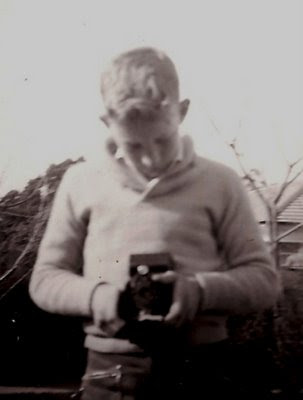


A memoir is not a review of an entire life. It is merely a piece of that life – a snippet, a chunk, an event that has taken place during that person’s life. It's the snapshot, not the album. The events are told from that person’s point of view.


“The writer of a memoir takes us back to a corner of his or her life that is usually vivid or intense.”
Zinsser,W (Ed). (1987). “Inventing the Truth: The Art and Craft Of Memoir”


A memoir incorporates a sequence of feelings, thoughts and observations surrounding the chosen event. Often the writer comes to a personal reflection on this event.

How does this event reflect my life?

What feelings, thoughts and observations are keys to this event?

In teaching students to write a memoir piece, it is important for the writer to narrow the topic before commencing the task of committing words to paper.

To begin, it may prove beneficial to read examples of memoirs or have examples read to them before they begin to generate their own potential topics.It allows the student to adequately identify personal experiences that could be shared with others in a memoir

As part of the immersion in this writing form, you need to select and read aloud, examples of memoir. Following this, explain that when authors write a memoir there are certain elements that they include in the text.
Introduction, -in which the author shares important information about the setting, including the time and date of the experience. The information in the introduction usually answers –who, what, where, when and why. The next section lays out the detail of the selected event. Students need to outline and organize the events before writing them down. The final element is a concluding statement, which is an optional extra in a memoir. It may detail a lesson learned, an observation on life, a reflection on the event, following the passage of time.


Questions For Memoirists

• What are your earliest memories?
• How far back can you remember?
• What have you seen that you can’t forget?
• What’s an incident that shows what your family and you are like?
• What’s an incident that shows what your friends are like?
• What’s something that happened at school that you’ll always remember?
• What’s something that happened to you at home that you ’II always remember?
• What’s an incident that changed how you think or feel about something?
• What’s an incident that changed your life?
• What’s a time or place where you were perfectly happy?
• What’s a time or place where you laughed a lot?
• What’s a time or place when it felt as if your heart was breaking?
• What’s a time with a parent that you’ll never forget?
• What’s a time with a grandparent that you’ll never forget?
• What’s a time with a brother or sister that you’ll never forget?
• What’s a time with a relative that you’ll never forget?
• Can you remember a time you learned to do something for the first time?
• What memories emerge when you make a time line of your life so far?
• What are the most important things that have happened to you each year of your life?

Adapted from Lessons That Change Writers, Nancie Atwell

Using The Memoirist Questions

Challenge your students to undertake the following task for their homework:

For at least 30 minutes one evening using the list ‘Questions For Memoirists,’ sit quietly and consider the possibilities. Begin by considering each question carefully. Look for ideas that will activate your memory bank. Capture broad topics as they emerge and write them as a bulleted list under the heading “ Possible Memoir Experiences” in your notebook. At this stage don’t feel compelled to go into details. Just use as many words as you need to preserve the essence of each memory. These broad topics will become a vital reference when you begin writing your memoirs.

Follow Up

Gather students in small groups with their notebooks and pencils and invite them to take turns at describing to one another the broad memories they have recorded. They may consider jotting down new memories that emerge as they listen to the recollections of their peers. This is making use of activated knowledge.

As the teacher your role is to circulate among them to listen and enjoy the material and help them to maintain the focus. Allow about ten minutes for this task. Following this reconvene as a class and lead a discussion among the whole class. Get them to focus on the questions from the prepared list that helped them uncover interesting memories. Invite them to talk about the specific questions and how those questions helped them to research their own lives.

Take a moment to get them to look at their own list of memoir experiences.
What did they discover?
Were they surprised by what you found?
Invite them to talk about the unexpected treasure that surfaced when they mined their past?

….Now they are ready to write in more detail on one of their listed
memories.

“Most of the basic material a writer works with is acquired before the age of fifteen.”
Willa Cather, Novelist.

Excavating Writing Ideas

Try This!

Find an old diary or writer’s notebook. Open it to any page and reread the entry. Let that be the inspiration or launching pad for a new piece of writing. Even if it’s not what you thought you’d ever write more about, give it your best shot, and see what happens.
Ah,the value of rereading your entries!


Lifting A Line -Two Examples

Lifting A Line from a text –Example 1

Here is a writing idea I picked up from listening to David Morely’s Writing Challenges, (Warick University UK). Those of you with technological pretensions may choose to download these writing challenges as podcasts. I found this link in the Itunes store but there is also a link through David's webpage.

For those of you who wish to contact David Morley’s web site, check out the Writing links to the right of this post, and it will take you directly to the place you are seeking, -It's as easy as that!

David challenged me to randomly open a book and point to any part of the facing page without sneeking a peek before hand. Then he asked me to choose a line from somewhere in the text near to where my finger landed. I had to choose a phrase that caught my eye. I was then asked to lift that line and write it in my writer’s notebook. David directed me to repeat this process until I had gathered approximately a page of random phrases. In the end my list looked something like this:

“He wanted an excuse to stay home…” (from Hoot , Carl Hiaasen)
“The sacred moment was turning into an agony…” (from Ash Road, Ivan Southall)
“The gears crunched and the truck wheeled onto the main road…” (from Heartsongs, Anne Proulx)
“Spouts of bitter laughter erupted…” (from Stargirl, Jerry Spinelli)
“It had something to do with the music…” (From Dirt Music, Tim Winton)

….And so one down the page.

With this simple exercise David Morley had provided me with an additional writing resource simply by challenging me to ‘lift a line’ from a previously written text. My found phrases provided a list of stimulating words that in times of need I can tap into when developing a piece of writing.

I can use those fragments to create a new scenario. I can use them to begin a new piece of writing, or I can insert them into a text at the appropriate moment.

A simple yet effective way to harvest writing ideas! Try this with your students. It will lessen the likelihood of them ever uttering the phrase –“I’ve got nothing to write about!”


Lifting A Line from a Text- Example 2

I read Cathy Applegate’s powerfully written story, "Raindance" to a Grade 6 class. "Raindance" is a picture story book that tells of the experiences encountered by a family living through a prolonged drought on a farm in rural Australia. It has not rained to any great degree for two years and the family is faced with the prospect of selling the farm. Eventually after much false hopes and disappointment the rain clouds gather and deliver a desperately needed downpour. The family rejoices. The author paints a beautiful picture with her description of the build up prior to the deluge, building the tension created by the incessant heat and dryness.
The story is rich in visual imagery and effective use is made of 'vivid verbs' and adjectives.

Following the read aloud I invited the students to revisit the text and view it through the eyes of a fellow writer. I provided the students with an extract of the text and asked them to underline or highlight those words, phrases or sentences that they believed were examples of the author using language in ways that connected or resonated with their idea of great writing. They were then asked to share with a writing partner and compare their respective observations about the writing.

I then modelled how I as a writer, could use the writing of Cathy Applegate to develop my own piece of writing. I chose a sentence extracted from a different part of the text to the one the students had examined and then created a new context by adding my own words

“All day it rains, and all day we watch and wonder, until eventually it slows and stops.” From ‘Rain-dance’
Finally, we can venture outside into the yard. We traipse across the squelchy lawn and stamp in puddles that have formed on the path. My sister shakes a tree and I get showered in water droplets.

“The heat has been washed out of the day.” From ‘Rain-dance’
The air is no longer soupy. What a relief! I was sick of sticking to the sheets and feeling like melting cheese. After two scorching summer days and nights I am looking forward to getting a good night’s sleep.

The students then set about lifting a line from the text of “Rain-dance” and using it as a launching pad for a piece of their own writing.

Student Response:
“Everything is quiet, everything is still. We wait and wait and wait, until we are no longer sure what we’re waiting for.”The tears have gone away. A new page of my life has begun. I am waiting for the divorce to stop. Waiting day after day till I do not know what I’m waiting for.

The Challenge of Teaching Effective Endings?


Let’s face it, as teachers of writing we have been much better at teaching students about effective leads and introductions than we have about constructing effective endings. It has certainly been a feature of the way we teach expository writing, where the conclusion is promoted as a careful restating of the writer’s viewpoint, but generally we have devoted more attention to introductions. Our students need to understand that the energy they devote to writing an effective lead needs to be evident in the endings they create.

Endings are the final contact the writer has with the reader. It is the last opportunity to make an impression.

For this reason young writers should be encouraged to take time with their endings and write them carefully. A great ending will not only make reading a satisfying experience, but prospective audiences will be more likely to want to read more of your work!

Endings matter! How many times have you as an adult reader been deeply involved in your reading only to find that story dissolves into a wholly unsatisfactory ending? When the story ends abruptly, we are left holding nothing but unresolved thoughts and wonderings. Our need for closure is not satisfied The ending may melt away into a treacly, or soppy ending that only serves to annoy. It may leave you feeling disappointed. You may indeed feel a little cheated or confused. So believe me, endings matter!

Our lives are full of beginnings and endings. A welcoming hug... a glance back as you wave good-bye...a car disappearing around the bend in the road, as our visitors leave. In the things we do every day, we experience starting and ending points. These experiences provide us with rich sensory images to which young writers need to be alerted. It is hardly surprising that proficient writers take such care to develop strong leads and endings.

The best of these don’t happen by chance- they are shaped and crafted with a keen sense of purpose. These writers know that it becomes a little easier with practice. When we teach children how to generate leads and endings using their own drafts, and expose them to good models, their writing improves dramatically.

With endings, it is best to teach students what not to do. There are countless wonderful ways to finish a poem, essay, or narrative, depending on your purpose and audience. But there are certain kinds of endings that occur repeatedly in the writing of students. If you teach young writers to recognize these ‘clangers’ in their writing, they are more likely to avoid them and craft more original endings.

People can’t always live happily ever after, and you’re left high and dry if all the characters are suddenly wiped out in dramatic circumstances such as a bomb landing in your breakfast cereal! You can’t wake up to find everything that has happened is just a dream. Readers feel cheated when writers end this way! Yet, this is what we often see in the writing of our students.

Let’s Alert Them to Endings that Irk!

The ‘Echo’ Ending: The type of ending indicates that the writer has a feeling that their writing does not convey what they want it to. When this happens, writers repeat their main point. In the process they labour the point way beyond what is necessary. It is akin to continually running over a dead cat. Students who have this tendency often just need to be reassured that they've done a good job in conveying their ideas earlier in the piece.

The ‘Escape Clause’ Ending: When the writing is beyond belief, or contains more loose ends than an octopus, it's common for students to conclude with those time honoured words, "And then I woke up and It was all a dream." It secures an easy way out for the writer, but leaves the reader feeling short changed.

The ‘That’s All Folks’ Ending: Students make the mistake of ending their writing with the characters dying or falling asleep. If you ask students never to end their pieces with phrases such as "...and they all went home," -You’ll find yourself spared these underwhelming endings.

Endings often address issues such as :
• Memories
• Feelings
• Decisions
• Hopes and Wishes


Some Effective Ending Strategies to consider:
• Summarize
• Encourage reader reflection
• Leave the reader wanting more
• Reveal the story’s true meaning
• Return to the start. (Circular Endings)
• Restate the Main Idea


Summarize…


It is not often that someone comes along who is both a true friend and a good writer. Charlotte was both.“
Charlotte’s Web, E B White


Encourage reader reflection…

The strange soft eerie space music began to alter all the people of the
world. They stopped making weapons. The countries began to think how they could live pleasantly along side each other, rather than how to get rid of each other. All they wanted to do was to have peace to enjoy this strange, wild, blissful music from the giant singer in space.
The Iron Man, Ted Hughes

Leave the reader wanting more!

The old man will stand and wave to people who are coming down the beach to meet him. They’ll be singing and laughing and carrying boats and oars, fiddles, whistles and drums. The seals will sing and dive around the rocks. And if the old man should say to you, as he pushes his boat into the surf, “Would you care to join us?” Take my advice, say, “Yes!”
The Seal Mother, Mordicai Gerstein

Reveal the story’s meaning

“What I have been trying to tell you all along is simply that my father, without the slightest doubt, was the most marvelous and exciting father any boy ever had.”
Danny the Champion of the World, Roald Dahl


Revisiting the starting point… The Circular Ending

“And when they were finally home in Virginia, they crawled into their silent, soft beds and dreamed about the next summer.”
The Relatives Came, Cynthia Rylant

Restating the Main Idea
“Although some people may think extending the school week will benefit the education level of the country I think otherwise. Extending the school week could actually hurt the education level of our country. Eliminating time for family, work, and relaxation will affect the attitudes of the students and teachers. Their attitudes will be so poor that there won't be a reason to have a school on Saturdays.”
Saturday School, Pro or Con, Sara Eiben


Ralph Fletcher reminds us that the ending is more than the ribbon that adorns a piece of writing, but rather the ending is that which resonates in the ear of the reader when the writing piece is complete.

Let’s elevate the ending to a position of equal importance. Allow it to stand alongside the introduction as a critical element in writing effectiveness.

In the end, we will gain better outcomes from our student writers. ‘Every stop is a place to start’ as my musical muse Jimmy Buffett stated so succinctly in his song La Vie Dansante.


References:


Six strategies to help Students Master Beginnings and Endings in their Writing, Brenda Power, Scholastic.

The Writer’s Idea Book, Jack Heffron, Writer’s Digest Books.

What a Writer Needs, Ralph Fletcher, Heinemann

Teaching The Qualities of Writing, JoAnn Portalupi and Ralph Fletcher, First Hand, Heinemann

Live Writing-Breathing Life Into Your Words, Ralph Fletcher, Avon Camelot

Thursday, August 14, 2008

Something Worth Sharing About Writing

It goes by several names. That brief few minutes at the end of the writing workshop. Sometimes it’s called ‘share time’. Some people refer to it as ‘share out’ or simply “share.” It’s that time at the conclusion of a lesson that all too often gets squeezed out, which is a tragedy because it represents a critical stage in the lesson, -It’s the finale that’s provides closure to an effective lesson. It’s when the fat lady of writing sings. And the aria is in praise of the writing that has just taken place! Deny her and you are diminishing the integrity of your writing program.

We should never underestimate the intrinsic value of ‘sharing’ writing. It remains an incredibly valuable teaching and learning opportunity. It should be protected within the workshop structure as one would protect anything of value. For the teacher it provides an invaluable opportunity to provide feedback on elements of the lesson just concluded.
Sometimes it’s a chance to celebrate a discovery, a breakthrough, a special moment where the developing writer has created a magical concoction of words and ideas that beg to be shared.
The teacher also has the opportunity to receive valuable feedback on students’ perceptions and understanding regarding the writing that is taking place within that particular group of writers. The reflective teacher senses messages relating to the effectiveness of their teaching. Their future instruction is thus informed. The moment is valued. This time provides an opportunity to share new knowledge across the group. The reflective teacher knows full well that there is more than one teacher of writing in every classroom. All contributions are therefore invited. Everyone listens actively.

This is a time for the teacher to act strategically. Students invited to share with the class are those students noted during the conferencing phase who can productively contribute to the collective understanding of the group. If, in the course of conducting a writing conference the teacher notices that young Kelsey has used action verbs effectively in her writing then it might be prudent to ask Kelsey to share her writing at the end of the lesson. If Jason, successfully transforms a piece of writing from a ho hum description into a piece of writing rich in voice, it would make sense to ask him to share with the class, how he went about this important transformation. The data a teacher collects from these roving conferences should contribute to the sharing forum. The students selected to share contribute to the attainment of the lesson’s objective – i.e. to further develop the quality of student writing.

Teachers sometimes structure share time as an opportunity to let students read their writing aloud to the class. This is often managed according to a list, or by randomly choosing volunteers. To achieve its potential, sharing needs to be more considered than mere random selection of students on any particular day. To share at the whole class level students need to be identified on the basis that they are making a tangible contribution, or have achieved a breakthrough in their writing that is worthy of recognition. It is critical to acknowledge effort and persistence.

It is possible to give every student an opportunity to share their writing at some point. This can be achieved through such structures as writing partners, author’s circles, or peer conferences. No student voice is denied under such structures. It doesn’t take students long to realize that if they want to make a contribution at the conclusion of the lesson, then they need to come up with something that is worth some air time.

Share time provides a sense of closure to the lesson. The teacher and students tie the learning threads together and then consider what comes next.

Asking questions such as:
“What did you learn about writing today?”
“What did you learn about yourself as a writer today?”

-encourages students to be reflective learners. Share time is an essentiaL part of the architecture of the writing workshop – and that’s a piece of information I’m more than happy to share.